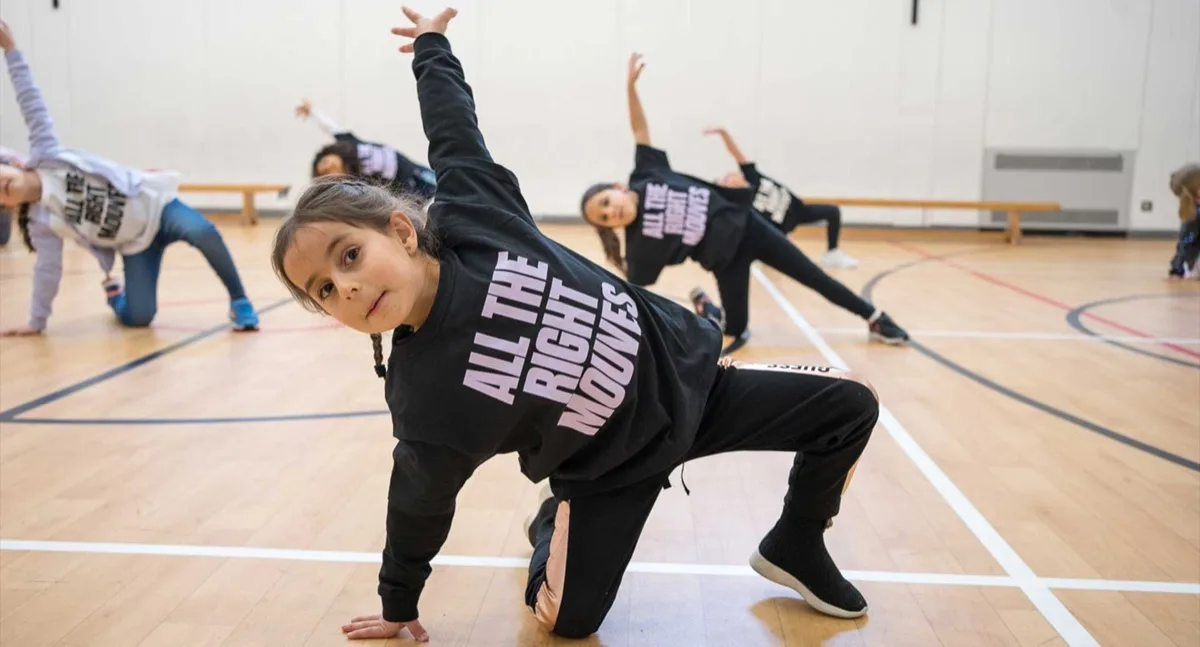
holiday camp
Holiday Dance Camps in London — Everything Parents Need to Know
3 March 2026 · 7 min read · Updated 3 March 2026

TL;DR
Holiday dance camps in London run during Easter, half-term and summer breaks, giving children aged 3 to 16 a full day of movement, creativity and fun. MOUVE by Dancing with Louise runs camps in Hendon NW4 covering hip hop, musical theatre, drama, dance gymnastics and more. Camp weeks end with a Friday performance for parents. Prices start at £48 per day for ages 5-12 and £55 per day for nursery (ages 3-4). This guide covers what to expect, how to choose the right camp, and what typical pricing looks like across London.
Key Takeaways
- Dance camps run during Easter, half-term and summer holidays for ages 3 to 16
- A typical day includes warm-up, technique, choreography, creative workshops, rehearsal and cool-down
- MOUVE camps in Hendon NW4 start at £48/day (ages 5-12) and £55/day (nursery, ages 3-4)
- Full-week discounts available — £219 for main camp and £255 for nursery
- Every camp week ends with a Friday performance for parents
- Look for DBS-checked staff, a clear daily structure, and an end-of-week outcome
Holiday dance camps in London run during Easter, half-term and summer breaks, giving children aged 3 to 16 a full day of movement, creativity and fun while school is out. MOUVE by Dancing with Louise runs dance and performing arts holiday camps in Hendon NW4, covering hip hop, musical theatre, drama, dance gymnastics and more. Every camp week ends with a Friday performance for parents. Prices start at £48 per day for ages 5-12 and £55 per day for nursery (ages 3-4), with full-week discounts available. A free camp T-shirt is included with 2+ days booked. When choosing a holiday camp, look for DBS-checked staff, a clear daily structure, and an end-of-week outcome like a performance or showcase — it gives children something to work towards.
Why Dance Camps Are Worth It
School holidays present a familiar challenge for parents: keeping children active, engaged and happy for weeks at a stretch. Dance camps solve that problem in a way that goes far beyond childcare.
A good dance camp gives children the chance to try styles they might never encounter in a regular weekly class — from musical theatre to street dance to dance gymnastics. They work with different teachers, meet children from other schools, and build confidence in a fresh environment.
The physical benefits are obvious. Children move for hours each day, building stamina, coordination and strength without it ever feeling like exercise. But the less visible benefits matter just as much. Dance camps develop teamwork, creative thinking, self-expression and resilience. Working towards a performance in just five days teaches children how to focus, collaborate and deliver under a deadline.
For many children, a holiday camp is the spark that turns a casual interest in dance into a genuine passion. And for parents, it is a week where you know your child is safe, active and doing something meaningful. MOUVE's holiday camps have been running for years, and many families return every holiday.
What Happens at a Typical Dance Camp Day
Every camp organises its day slightly differently, but a well-run dance camp follows a reliable structure that keeps energy high and children focused.
Morning arrival and warm-up (09:00-10:00): Children arrive, settle in and start with a group warm-up. This gets bodies moving, sets the tone for the day and helps children who are new to the group feel included.
Technique and style sessions (10:00-12:00): The core of the morning is spent learning new dance styles and choreography. Sessions rotate through different styles — hip hop one hour, musical theatre the next — so children experience variety throughout the week.
Lunch and free time (12:00-13:00): A break for packed lunches, socialising and games. This downtime is important for younger children in particular.
Creative workshops and rehearsal (13:00-15:00): Afternoons are often devoted to creative work — drama games, choreography challenges, costume making or rehearsing for the end-of-week performance. This is where children pull together everything they have learned.
Cool-down and pick-up (15:00-15:30): The day ends with a gentle cool-down and a review of what was achieved. Parents collect their children feeling like they have had a full and rewarding day.
Many camps, including MOUVE, offer early drop-off and late pick-up options for working parents who need extended hours.
Ages and What to Expect
Dance camps are not one-size-fits-all. The best camps split children into age-appropriate groups so the content, pace and expectations match their developmental stage.
Nursery / ages 3-4: At this age, "dance camp" is really about creative play, music, movement and socialising. Sessions are shorter, with plenty of breaks for snacks and rest. Staff ratios are higher. At MOUVE, nursery camp runs with its own dedicated team and a programme designed around shorter attention spans and lots of variety.
Main camp / ages 5-12: This is the core camp experience. Children learn real choreography, work on technique across multiple styles, and rehearse for a performance. The week has a clear arc — learning early in the week, rehearsing in the middle, and performing on Friday. Children are typically grouped further within this range (5-7 and 8-12, for example) so the material is age-appropriate.
Teens / ages 13-16: Some camps offer teen-specific sessions with more advanced choreography, a faster learning pace and a focus on performance quality. These are ideal for teenagers who already dance and want to push themselves during the holidays.
How to Choose the Right Holiday Camp
Not all holiday camps are created equal. Here is what to look for when comparing options.
Staff qualifications and DBS checks: Every member of staff working with children should have a current enhanced DBS check. Teaching staff should hold recognised dance qualifications. Do not be afraid to ask — a reputable camp will be transparent about this.
A clear daily structure: Look for a published timetable or at least a description of how the day is organised. Children thrive with routine, especially in a new environment. A camp that says "we just see how the day goes" is a red flag.
An end-of-week outcome: The best camps give children something to work towards — a performance, a showcase, a video, or a sharing for parents. This creates focus, builds teamwork and gives children a sense of achievement. At MOUVE, every camp week ends with a Friday performance.
Age-appropriate grouping: Children should be grouped by age, not thrown together in one large group. A 4-year-old and a 12-year-old need very different things from a camp day.
Venue and facilities: Check that the venue is clean, safe and suitable for dance. At minimum, the space should be well-ventilated with accessible toilets and a safe area for lunch.
Reviews and reputation: Ask other parents and check Google reviews. A camp with a strong track record will have photos and testimonials from previous sessions.
Holiday Camp Pricing — What Is Normal?
Holiday camp pricing in London varies widely depending on the area, the provider and what is included. Here is a rough guide to help you benchmark.
Budget camps (£25-40 per day): Typically run by local councils, community centres or multi-sport providers. Dance may be one activity among many rather than the focus. Staff may not be specialist dance teachers.
Mid-range camps (£40-55 per day): Most dedicated dance and performing arts camps fall into this range. Expect qualified teachers, age-appropriate grouping and a performance or outcome at the end of the week. MOUVE's camps sit here — £48 per day for ages 5-12 and £55 per day for nursery ages 3-4.
Premium camps (£60-90 per day): These are often run by West End or professional dance companies in central London. The price reflects the location and brand as much as the content. Quality is typically high, but so is the journey time for North London families.
Full-week discounts are common and worth looking for. At MOUVE, a full week for ages 5-12 is £219 (saving £21 compared to daily rates) and nursery is £255 (saving £20). A free camp T-shirt is included when you book 2 or more days.
Extras to budget for: Early drop-off and late pick-up are often available at an additional cost (typically £5-10 per session). Some camps charge extra for merchandise or special workshops.
Frequently Asked Questions
The FAQ section above covers the most common questions parents ask about holiday dance camps. If you have a question that is not covered, please get in touch.
Book a MOUVE Holiday Camp
MOUVE runs dance and performing arts holiday camps during every school break — Easter, half-term and summer. Children aged 3 to 12 enjoy a week of dance, drama, creativity and friendship, ending with a Friday performance for the whole family.
Book a MOUVE holiday camp and give your child a school holiday to remember. For a full guide to the best Easter and summer camps in London, see our 2026 summer camps guide.
Frequently Asked Questions
What ages are holiday dance camps suitable for?
Most dance camps cater for ages 3 to 12, with some extending to age 16. At MOUVE, nursery camp is for ages 3-4 and the main camp covers ages 5-12. Children are grouped by age so activities are appropriate for their developmental stage.
What should my child bring to a dance camp?
Comfortable clothing they can move in, trainers or dance shoes (bare feet are fine for some styles), a packed lunch, a water bottle, and a small snack. Most camps will send a detailed checklist before the first day.
Does my child need dance experience to attend a holiday camp?
No. Holiday dance camps are designed to be fun and accessible for all abilities, including complete beginners. The focus is on creativity, teamwork and enjoyment — not prior experience. Children who already dance will also be challenged with more advanced material.
How much do holiday dance camps in London typically cost?
Prices vary across London, but expect to pay between £40 and £70 per day depending on the area, the camp provider and the age group. Full-week bookings usually offer a saving. At MOUVE, a full week for ages 5-12 is £219 (saving £21 on daily rates) and nursery is £255 (saving £20).
Is there a performance at the end of the week?
Many good camps include an end-of-week performance or sharing for parents. At MOUVE, every camp week ends with a Friday showcase where children perform the routines and pieces they have been working on all week. It is a highlight for both children and families.