zumba
Zumba and Dance Fitness Classes in North London — A Beginner's Guide
3 March 2026 · 7 min read · Updated 3 March 2026
TL;DR
Zumba and dance fitness classes in North London are a fun, social way to stay fit — no dance experience required. MOUVE by Dancing with Louise runs MOUVEit! dance fitness sessions five times a week across Hendon NW4, Hampstead Garden Suburb NW11, and online via Zoom. MOUVEit! is zumba-inspired but freshly choreographed every week. This guide covers what to expect, what to wear, and how to choose the right class.
Key Takeaways
- No dance experience is needed — classes are designed for all abilities and fitness levels
- MOUVE runs MOUVEit! dance fitness five times a week across Hendon NW4, NW11 and online
- MOUVEit! is zumba-inspired with fresh choreography every week by founder Louise Leach
- Your first class is free with no commitment
- Dance fitness benefits include improved cardiovascular health, reduced stress and social connection
- Wear comfortable workout clothes and trainers — no special equipment needed
Zumba and dance fitness classes in North London are a fun, social way to stay fit — no dance experience required. MOUVE by Dancing with Louise runs MOUVEit! dance fitness sessions five times a week across Hendon NW4, Hampstead Garden Suburb NW11, and online via Zoom. MOUVEit! is zumba-inspired but freshly choreographed every week by founder Louise Leach, so no two classes are the same. Sessions are designed for women of all abilities and fitness levels. Your first class is free with no commitment. Other options in the area include zumba at Nuffield Health Hendon and Better Hendon Leisure Centre. When choosing a class, look for a qualified instructor, a welcoming atmosphere, and convenient session times — consistency matters more than intensity.
What Is Zumba and Dance Fitness?
Zumba is a fitness programme that combines Latin and international music with dance moves. Created in the 1990s by Colombian dancer Alberto "Beto" Perez, it has grown into a global phenomenon with millions of participants worldwide. The format is simple: an instructor leads the class through a series of choreographed routines set to high-energy music. You follow along, and nobody cares if you miss a step.
Dance fitness is a broader category that includes any group exercise class built around dance-based movement. Some follow a specific brand (like Zumba or Sh'Bam), while others are independently choreographed by the instructor. The common thread is that they use music, rhythm and choreography to make exercise feel less like a chore and more like a night out.
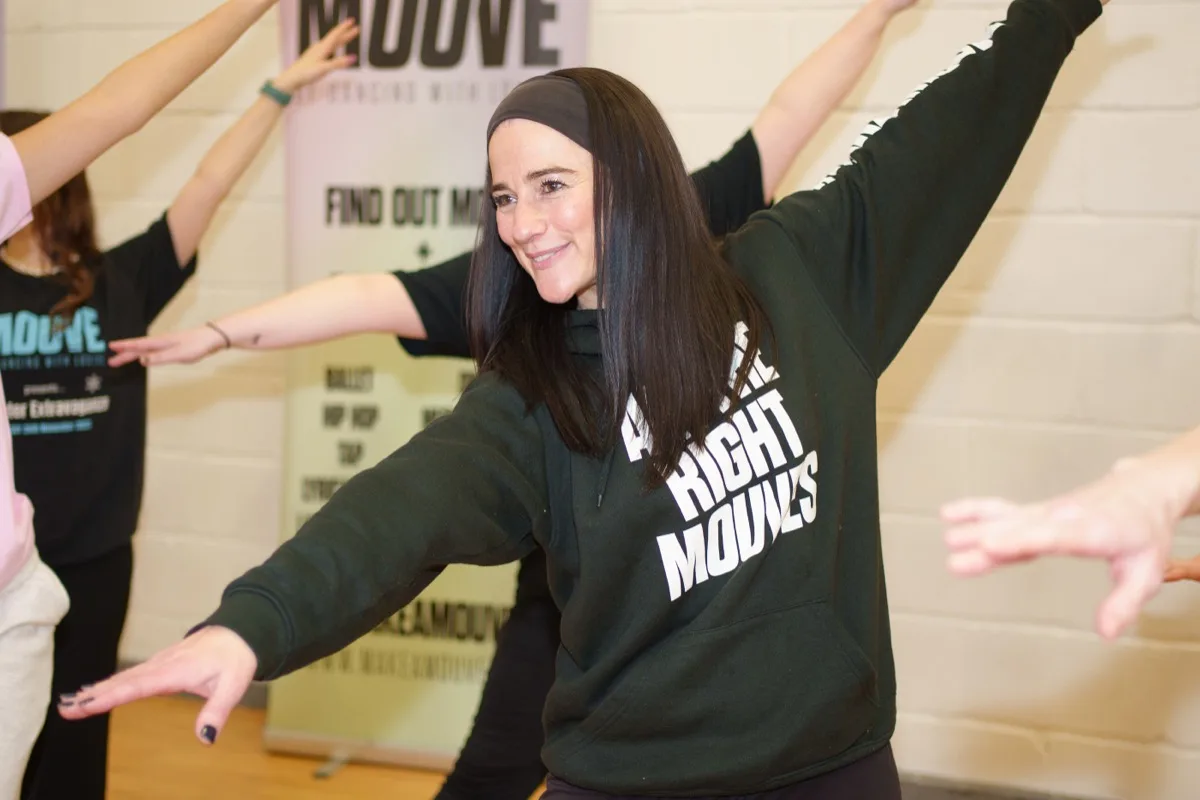
MOUVEit! is MOUVE's own take on dance fitness. Created and choreographed by founder Louise Leach, each class features original routines set to a mix of chart, Latin, pop and funk music. Unlike branded programmes where the same routines repeat for weeks, MOUVEit! brings something new every session. It is designed to be high-energy but accessible — the kind of class where you finish drenched in sweat but grinning from ear to ear.
Benefits Beyond Fitness
The physical benefits of dance fitness are well documented. The NHS recommends adults aim for at least 150 minutes of moderate activity per week — a 60-minute dance fitness class three times a week easily meets that target. Regular sessions improve cardiovascular health, increase stamina, strengthen muscles (particularly the core and legs) and improve balance and coordination. A typical 60-minute class burns 400 to 600 calories.
But the benefits that keep people coming back are often the ones you cannot measure on a scale.
Mental health and stress relief. Movement releases endorphins — the body's natural mood boosters. Research published in The Arts in Psychotherapy found that dance-based exercise reduces symptoms of depression and anxiety more effectively than many other forms of physical activity. When you are counting beats and following choreography, there is no space in your head for the day's worries.
Social connection. Dance fitness classes create a sense of community that solo gym sessions simply cannot replicate. You are moving together, laughing together, and sharing the experience of learning something new. For many women, their weekly class becomes a social anchor — a fixed point in the week that they look forward to.
Confidence. There is something powerful about discovering that your body can do things you did not think it could. Over weeks and months, the choreography that felt impossible at first becomes second nature. That sense of progress builds quiet confidence that extends well beyond the studio.
Cognitive benefits. Learning and remembering choreography is a genuine mental workout. It challenges working memory, spatial awareness and coordination — the same cognitive skills that decline with age if not exercised. Dance fitness is brain training disguised as fun.
What to Wear and Bring
One of the best things about dance fitness is how little you need to get started.
Clothing: Leggings or joggers, a breathable top, and a supportive sports bra. Avoid anything too baggy that might get in the way of movement.
Footwear: Trainers with good lateral support — cross-trainers or aerobics shoes are ideal. Avoid running shoes with chunky soles, as they can catch during side steps and turns.
What to bring: A water bottle, a small towel, and a sense of humour. The ability to laugh at yourself when you go left and everyone else goes right is the only essential skill.
What you do not need: Dance experience, a certain fitness level, coordination, rhythm, or any specific body type. A good instructor makes everyone feel welcome regardless.
Zumba vs Dance Fitness vs Aerobics — What Is the Difference?
These terms are often used interchangeably, but there are some real differences worth understanding.
Zumba is a specific branded programme. Zumba instructors are licensed and follow a set format. Music is predominantly Latin (salsa, merengue, reggaeton, cumbia) with some pop and hip hop mixed in. Choreography is pre-set and often repeated over several weeks. Classes follow a consistent structure worldwide — a Zumba class in London will feel similar to one in New York.
Dance fitness is a broader, unbranded category. Instructors create their own choreography and choose their own music. This means more variety — your instructor might mix Latin, Afrobeats, 80s pop and current chart hits in a single class. The trade-off is that quality depends more heavily on the individual instructor. MOUVEit! at MOUVE falls into this category — freshly choreographed every week with a wide musical range.
Aerobics is the older sibling. Popularised in the 1980s, traditional aerobics focuses on repetitive, fitness-driven movements (step touches, grapevines, knee lifts) set to music but with less emphasis on dance-style choreography. It is effective exercise but typically less varied and less playful than dance fitness.
Which is right for you? If you want consistency and a globally standardised format, Zumba is a solid choice. If you prefer variety, personality and a class shaped by its instructor, an independent dance fitness class like MOUVEit! is likely to feel more engaging. If your primary goal is cardio efficiency with minimal choreography, aerobics or a gym-based class might suit better.
Where to Find Zumba and Dance Fitness in North London
Hendon (NW4) and Hampstead Garden Suburb (NW11): MOUVE by Dancing with Louise runs MOUVEit! dance fitness five times a week. Sessions are available in person at venues in NW4 and NW11, plus online via Zoom for those who prefer to dance at home. Your first class is free. The community is welcoming, established and growing — many members have been attending for years.
Hendon leisure centres: Better Hendon Leisure Centre and Nuffield Health Hendon both offer group fitness timetables that include Zumba or dance fitness sessions. These tend to follow a gym-class format — effective but less community-focused than a dedicated studio.
Finchley and Barnet: Several independent instructors run Zumba and dance fitness classes in community halls across Finchley, Barnet and Mill Hill. Check local listings and Facebook groups for current schedules.
Online: If you prefer the flexibility of dancing at home, MOUVE's online MOUVEit! sessions let you join via Zoom from anywhere. The live format means you still get the energy of a real class with the convenience of your own living room.
When choosing a class, visit in person if you can. The atmosphere matters as much as the choreography. A class where you feel welcomed, included and energised from the first session is worth more than the most technically polished routine in a room full of strangers.
Frequently Asked Questions
The FAQ section above covers the most common questions beginners ask about zumba and dance fitness. If your question is not answered there, get in touch — we are always happy to help.
Book a Free MOUVEit! Class
Ready to try dance fitness for yourself? Your first MOUVEit! class is completely free — no strings, no commitment. Choose from five weekly sessions across Hendon, Hampstead Garden Suburb and online.
Book your free MOUVEit! class and find out why hundreds of women across North London have made it part of their week.
Frequently Asked Questions
Do I need dance experience to try a zumba or dance fitness class?
No. Zumba and dance fitness classes are designed for complete beginners. The choreography is simple and repetitive, and the instructor demonstrates every move. Nobody expects you to get everything right — the focus is on having fun and moving your body.
What is the difference between zumba and MOUVEit!?
Zumba is a branded fitness programme with pre-choreographed routines set to Latin and international music. MOUVEit! is MOUVE's own dance fitness class — zumba-inspired but with original choreography created fresh each week by founder Louise Leach. It draws on a wider range of music styles and feels less formulaic.
How many calories does a dance fitness class burn?
A typical 60-minute dance fitness session burns between 400 and 600 calories, depending on the intensity and your body weight. But calorie counting misses the bigger picture — the mental health, social and mood benefits are often what keep people coming back.
What should I wear to my first class?
Comfortable workout clothes that let you move freely — leggings or joggers and a breathable top. Trainers with good support are best (avoid running shoes with chunky soles as they can catch). Bring a water bottle and a small towel.
Can I try a class before committing to a term?
Yes. At MOUVE, your first MOUVEit! class is completely free with no commitment. There are five sessions each week across different locations and times, including an online option, so you can find one that fits your schedule.