pre-school activities
Pre-School Dance vs Gymnastics vs Swimming — How to Choose
14 April 2026 · 7 min read · Updated 14 April 2026
TL;DR
Dance, gymnastics and swimming are all excellent choices for toddlers and pre-schoolers — the right one depends on your child's temperament, your priorities, and what is available locally. Many families combine two activities, most commonly swimming plus one other. Dance offers the broadest developmental range (coordination, creativity, social skills, confidence and performance), gymnastics builds strength and spatial awareness, and swimming is a non-negotiable life skill.
Key Takeaways
- All three activities are developmentally valuable — this is not a competition between them
- Swimming is a life skill and most parents rightly prioritise it alongside one other activity
- Dance develops coordination, creativity, social skills and performance confidence in a group setting
- Gymnastics builds strength, flexibility and spatial awareness with an individual focus
- The combination approach works well — many MOUVE families do swimming plus dance to cover physical, creative and social development
Dance, gymnastics and swimming are the three activities parents consider most often for toddlers and pre-schoolers. All three are excellent choices. None of them is the wrong answer. The right one depends on your child, your priorities, and — honestly — what fits your schedule and location. Many families end up doing more than one, and that combination approach is often the best strategy of all.
This guide is a genuine comparison to help you think through the decision. It is written by a dance school, but the aim is to be fair — because a parent who feels well-informed is far more likely to make a choice that sticks.
Quick Comparison
| Factor | Dance | Gymnastics | Swimming | |---|---|---|---| | Starting age | 18 months (parent-and-child) | 2-3 years | 6 months (baby swim) | | Key skills developed | Coordination, rhythm, confidence, creativity, social skills | Strength, flexibility, spatial awareness | Water safety, endurance, full-body fitness | | Group vs individual | Group classes (social skills built in) | Group with individual focus | Usually small groups | | Progression pathway | RAD ballet exams, multiple styles to explore | Levels, competition track | Levels, badges | | Performance opportunity | Annual showcase on a real stage | Competitions, displays | Galas | | Parent involvement (toddler age) | In-room for 18 months-2 years, then independent | Varies by gym | In-pool for baby classes | | Typical session length (toddlers) | 30-45 minutes | 45-60 minutes | 30 minutes |
Each activity emphasises something different. Dance is the most socially oriented and creatively broad. Gymnastics is the most physically demanding. Swimming is the most essential as a safety skill.
When Dance Might Be the Best Fit
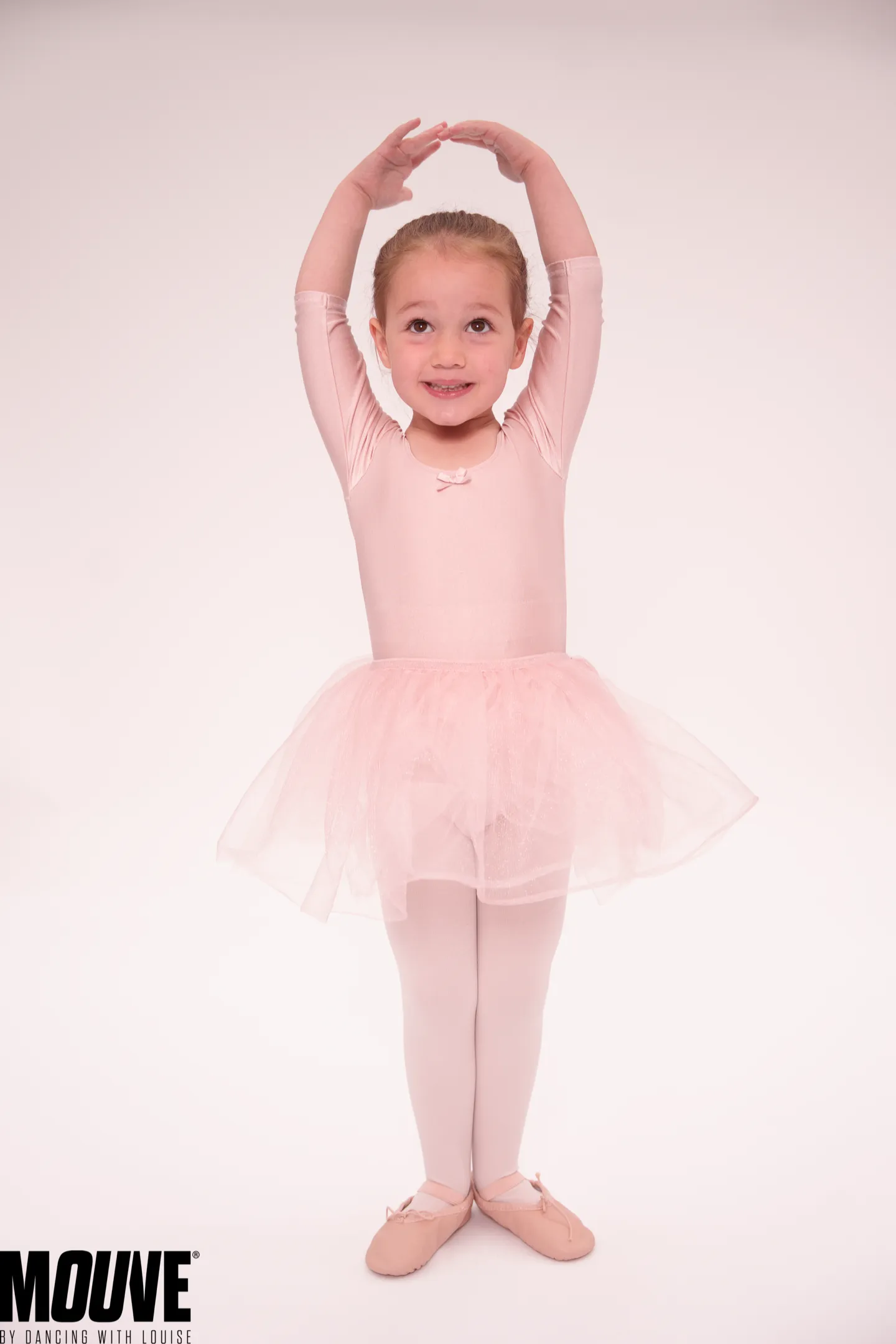
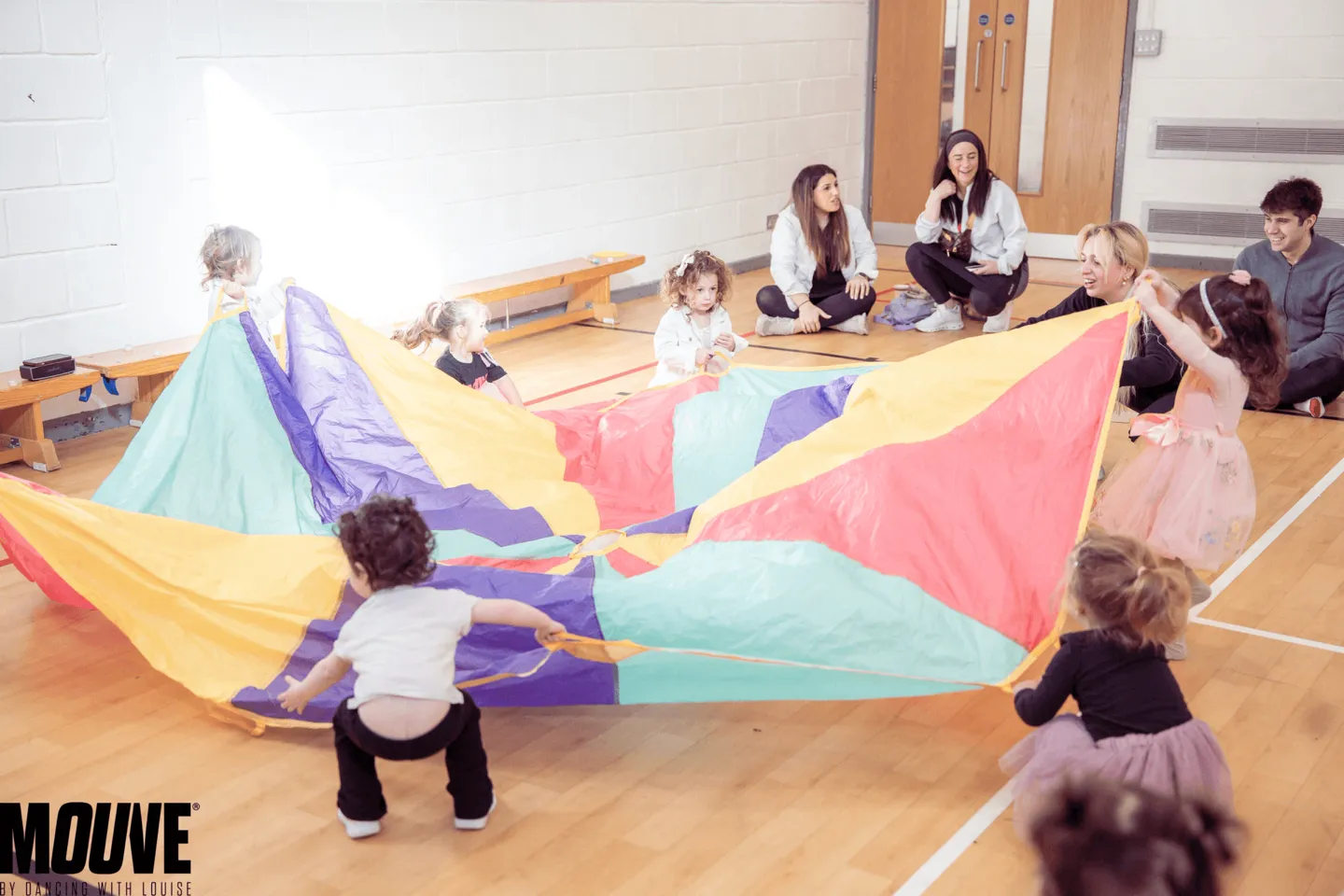
Dance tends to suit children who respond to music — the ones who stop what they are doing when a song comes on, who bounce or sway instinctively, who enjoy stories and imaginative play. It also suits children who benefit from a structured group social setting, because dance classes are inherently collaborative. Children learn to take turns, follow a teacher, move in time with others, and eventually perform together on stage.
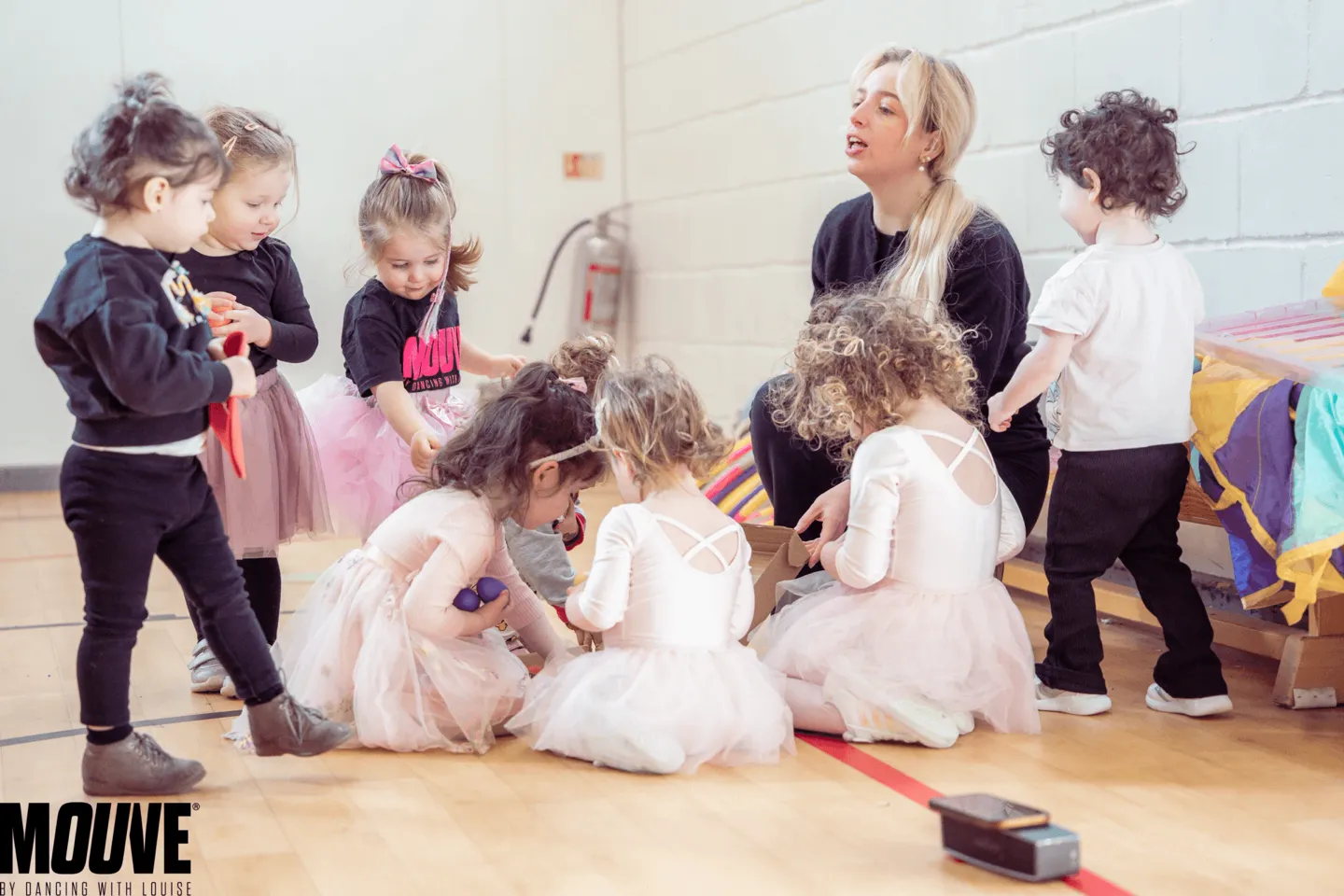
What makes dance distinctive as a pre-school activity is the breadth of development it covers. A child in a dance class is working on coordination, rhythm, listening, creativity, confidence and social interaction — all in the same session. At MOUVE, the Talented Tots class (ages 2.5-4) gives children exposure to four disciplines in a single class: ballet, acro, hip hop and musical theatre. That variety keeps young children engaged and helps parents discover which style resonates before committing to one path.
Dance also offers a clear progression pathway. Children who start in Tots classes can move through to Mini MOUVERS, junior groups, and eventually RAD graded ballet exams — giving them something to work towards at every stage.
For children who love both dance and the physical, tumbling side of movement, MOUVE's Tots Acro Bop class bridges the gap between dance and gymnastics, combining choreography with gymnastic elements like rolls, balances and cartwheels.
When Gymnastics Might Be the Best Fit
Gymnastics is a strong choice for children who are very physical — the climbers, the ones who are upside down on the sofa, the children who seem to have no fear of height or movement. It builds exceptional strength, flexibility and spatial awareness, and gives children a clear sense of achievement as they master specific skills.
The individual focus of gymnastics can suit children who are less interested in group social dynamics and more motivated by personal progression. The competition pathway is well-structured for children who thrive on measurable goals.
If your child loves the physical, acrobatic side of movement but you also want them to develop musicality and performance confidence, it is worth knowing that MOUVE's Acro Bop classes combine gymnastic skills with dance — offering a middle ground between the two disciplines.
When Swimming Might Be the Best Fit
Swimming is different from the other two because it is a life skill. The ability to be safe in water is not optional, and most parents rightly treat swimming lessons as a baseline rather than a choice. The Royal Life Saving Society UK recommends that every child should learn to swim.
Baby and toddler swim classes can start from as young as 6 months, making swimming the earliest activity on this list. It builds water confidence, full-body fitness, and endurance. For children with additional needs or sensory sensitivities, swimming can also be particularly beneficial — the water provides sensory input that some children find calming.
The practical reality is that most parents do swimming and one other activity. Swimming covers the safety and fitness foundation; the second activity — whether dance, gymnastics, football or something else — covers the social, creative or competitive dimension that swimming alone does not.
The Combination Approach
This is what most MOUVE families actually do: swimming plus dance. It is a combination that covers a wide range of developmental needs without overscheduling a young child.
Swimming handles water safety and physical fitness. Dance handles creativity, rhythm, social skills, and performance confidence. Together, they give a child a genuinely rounded experience — the practical life skill alongside the creative, expressive outlet.
Two activities per week is manageable for most toddlers and pre-schoolers. More than two and you risk overscheduling, which leads to tiredness and resistance. If you are choosing just one activity alongside swimming, the question to ask is: does my child need more physical challenge (gymnastics) or more creative and social development (dance)?
For many children, the answer is that they need the creative and social dimension — and that is where dance excels. But there is no wrong answer. The best activity is the one your child enjoys enough to want to go back to each week.
How to Decide
A few practical questions that help:
- Does your child light up when music plays? Dance is likely a natural fit.
- Is your child extremely physical — climbing, jumping, tumbling constantly? Gymnastics may channel that energy well. (Or consider Acro Bop at MOUVE, which combines both.)
- Can your child swim confidently? If not, start there — it is the one non-negotiable.
- Does your child thrive in group settings or prefer individual focus? Dance is strongly group-oriented; gymnastics offers more individual attention within a group.
- What does your schedule allow? One activity plus swimming is plenty for a 2-3 year old.
The single best way to decide is to try a class. Most good providers offer a trial session, and you will know within 30 minutes whether your child is engaged.
Book a free trial class at MOUVE — no payment details needed until you decide to continue. Classes run from 18 months in Hendon NW4, and the Talented Tots class is designed to give pre-schoolers a taste of multiple dance styles in one session.
If you are researching activities for a child under 3, you might also find these guides useful:
Frequently Asked Questions
Is dance or gymnastics better for a 2 year old?
Neither is objectively better — it depends on the child. Dance tends to suit children who respond to music, enjoy imaginative play, and thrive in social group settings. Gymnastics tends to suit children who are very physical, love climbing and tumbling, and enjoy mastering individual skills. At MOUVE, Talented Tots (from age 2.5) gives children exposure to ballet, acro, hip hop and musical theatre in a single class — combining elements of both.
Can my toddler do dance and swimming at the same time?
Yes, and many families do exactly this. Swimming and dance complement each other well — swimming covers water safety and full-body fitness, while dance adds creativity, rhythm, social skills and performance confidence. Two activities per week is manageable for most toddlers without overscheduling.
What are the best activities for toddlers near me in North London?
North London has strong options for all three activities. MOUVE by Dancing with Louise in Hendon NW4 offers dance classes from 18 months (parent-and-child) and structured group classes from age 2.5. For swimming, check local leisure centres for baby and toddler swim programmes. For gymnastics, look for British Gymnastics registered clubs in your area. A free trial class is the best way to find the right fit for your child.