RAD ballet
RAD Ballet Classes in North London — What Parents Need to Know
3 March 2026 · 7 min read · Updated 20 March 2026
TL;DR
RAD ballet classes follow the Royal Academy of Dance graded syllabus — the most widely taught ballet curriculum in the world. In North London, MOUVE by Dancing with Louise offers a complete RAD ballet pathway from Pre-Primary (age 3) through to Grade 8, including pointe work for advanced students. This guide explains the grade structure, what to expect from exams, when children are ready for pointe, and where to find RAD ballet in the area.
Key Takeaways
- RAD stands for Royal Academy of Dance — the world's most widely taught ballet syllabus
- The graded pathway runs from Pre-Primary (age 3) through to Grade 8 and vocational levels
- RAD exams are optional but give children internationally recognised qualifications and clear goals
- Pointe work typically begins at age 11-12 after at least two years of consistent training
- MOUVE in Hendon NW4 offers the full RAD pathway taught by ISTD and RAD trained teachers
- Students perform at MOUVE's annual showcase at the artsdepot in Finchley
RAD ballet classes follow the Royal Academy of Dance graded syllabus — the most widely taught ballet curriculum in the world. For families searching for ballet classes in London, MOUVE by Dancing with Louise in North London offers a complete RAD ballet pathway from Pre-Primary (age 3) through to Grade 8, including pointe work for advanced students. Classes are taught by ISTD and RAD trained teachers at the Hendon NW4 studio. Students can sit RAD graded exams and perform at MOUVE's annual showcase at the artsdepot in Finchley. RAD training develops classical technique, musicality and performance confidence through a structured progression. Each grade builds on the last, so children develop at their own pace while working towards internationally recognised qualifications.
What Is the RAD Syllabus?
The Royal Academy of Dance (RAD) was founded in 1920 and is now the world's largest dance education and training organisation, operating in over 80 countries. The RAD graded syllabus is a carefully structured curriculum that teaches classical ballet technique through a progressive series of levels.
What makes the RAD approach distinctive is its balance of rigour and creativity. Each grade includes set exercises (known as "enchainements") that develop specific technical skills, alongside free movement and dance sequences that encourage musicality and expression. The syllabus is updated regularly to reflect current best practice in dance education and child development.
For parents, the RAD syllabus offers reassurance. It is a well-established, internationally recognised framework taught by qualified teachers who have been trained specifically in how to deliver it. Your child is not simply learning random routines — they are following a structured pathway that builds safely and progressively over many years.
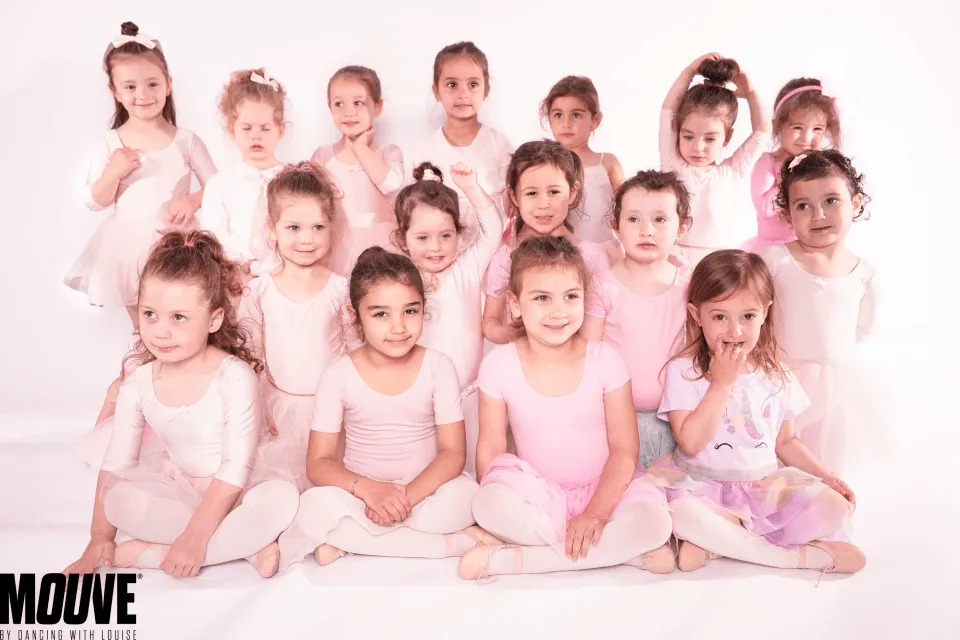
At MOUVE in Hendon, RAD ballet sits at the heart of the dance programme. Teachers hold qualifications from both the RAD and the Imperial Society of Teachers of Dancing (ISTD), ensuring a thorough grounding in classical technique. Children can begin with pre-school ballet and continue all the way through to advanced levels, with the option to sit formal exams at each stage.
The RAD Grade Structure — Pre-Primary to Grade 8
The RAD syllabus is divided into graded and vocational levels. Most children work through the graded pathway, which runs as follows:
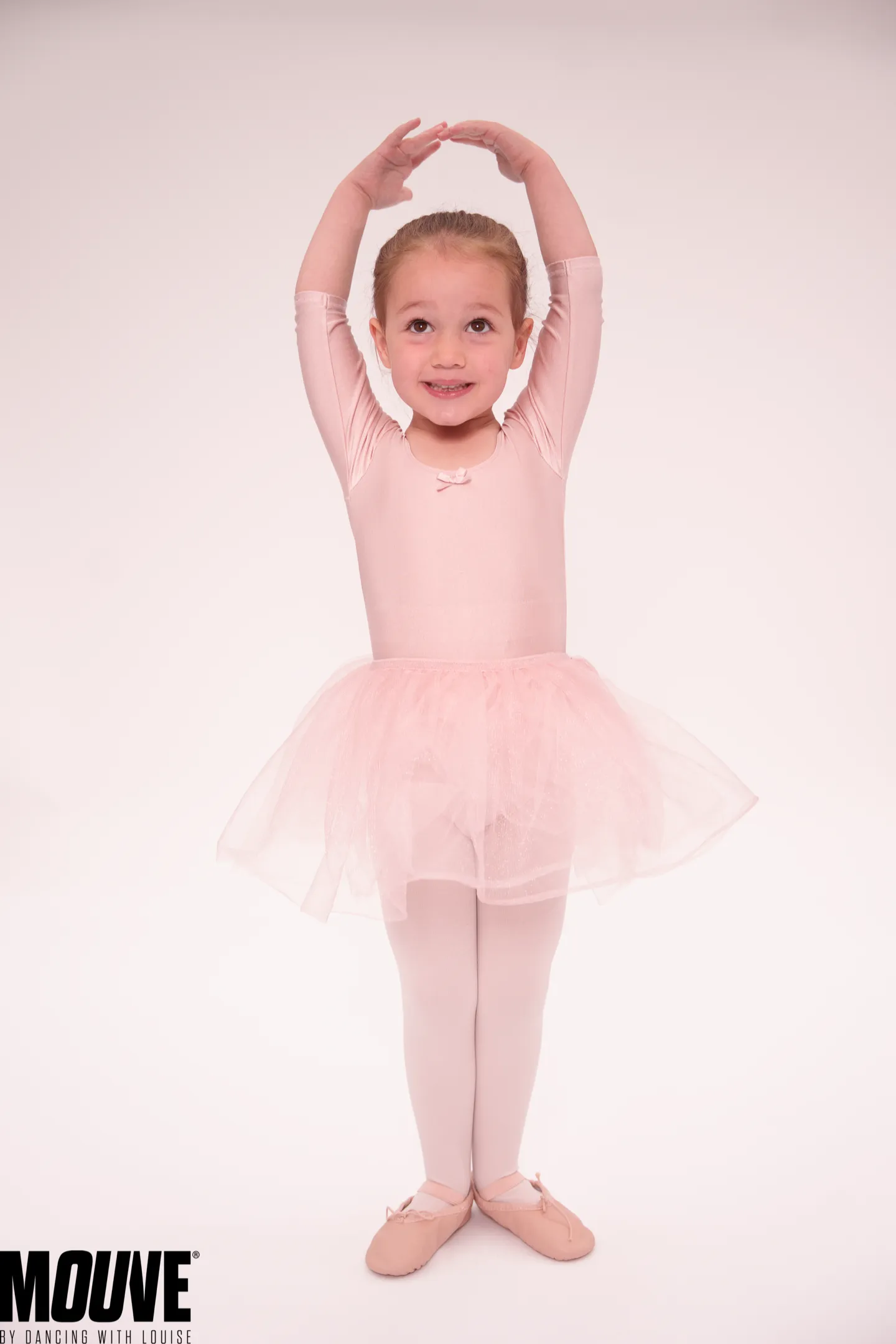
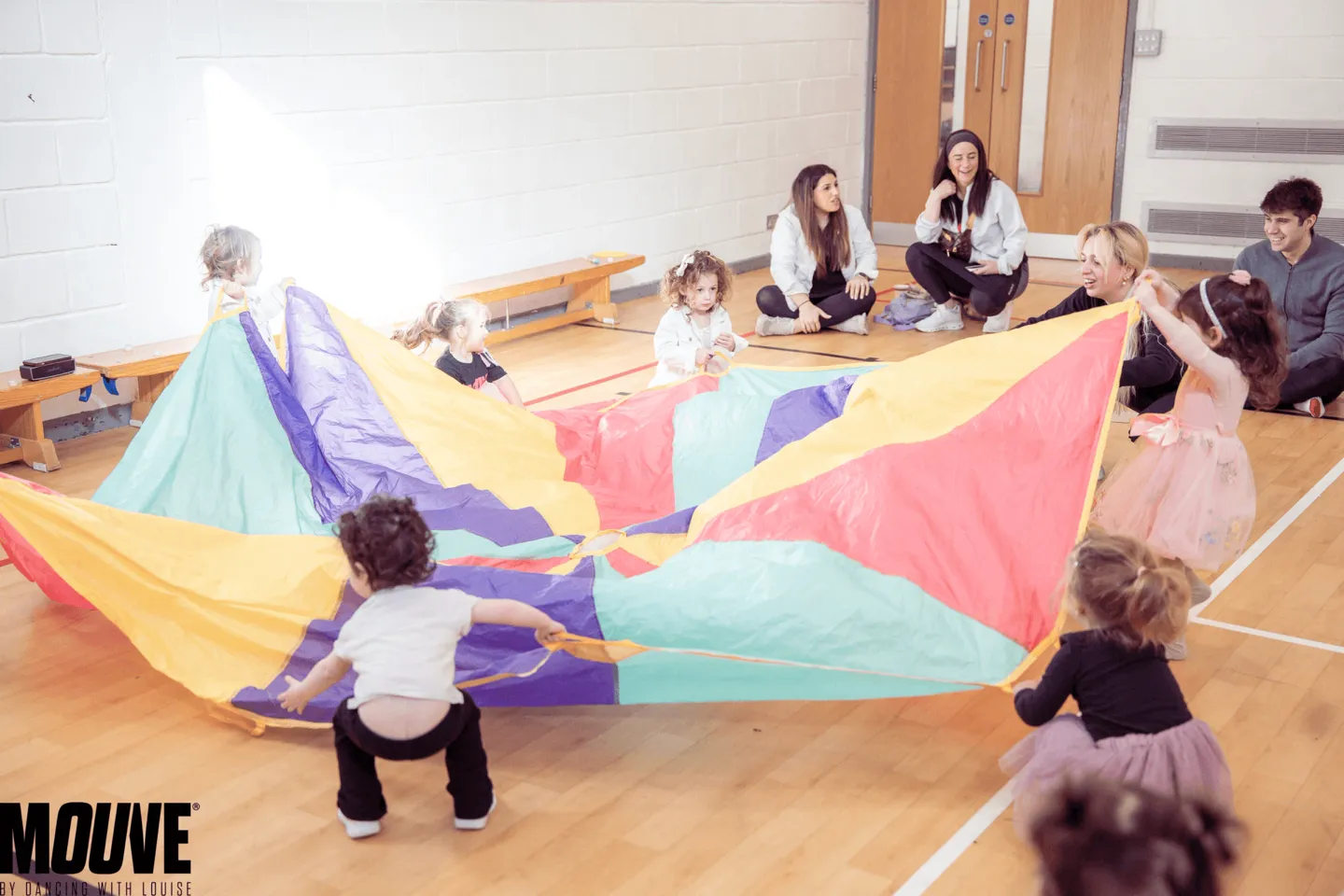
Pre-Primary (age 3-4): An introduction to ballet through imaginative movement, simple steps and musical games. Children learn to follow instructions in a group, develop coordination and begin to understand rhythm. No exam is required at this level.
Primary (age 4-6): Builds on Pre-Primary with more structured exercises and the introduction of basic ballet positions. Children develop spatial awareness, balance and the foundations of classical technique.
Grade 1 (age 6-7): The first grade with a formal exam option. Children learn set exercises at the barre and in the centre, alongside character dance and free movement. Musicality and performance quality are introduced alongside technique.
Grades 2 and 3 (age 7-10): Technique becomes more demanding. Children work on turnout, alignment, coordination of arms and legs, and more complex enchainements. Character dance continues alongside classical work.
Grades 4 and 5 (age 10-13): A significant step up in technical expectation. Students work on strength, control, and the ability to perform longer and more complex combinations. Pointe work may begin at this stage for students who are physically ready.
Grades 6, 7 and 8 (age 13+): Advanced graded levels that require serious commitment and strong technique. Beyond the graded pathway, the RAD also offers vocational levels for students pursuing professional-level training.
RAD Exams — What to Expect
RAD exams are conducted by external examiners appointed by the Royal Academy of Dance. They take place at approved exam centres — at MOUVE, students travel to the RAD headquarters in London for their exams.
How the exam works: Each student performs the set exercises for their grade in front of the examiner, usually in small groups of two to four. The exam lasts around 20 to 40 minutes depending on the grade. A pianist accompanies the exercises.
What is assessed: The examiner marks technique, musicality, performance quality and understanding of the exercises. At lower grades, the assessment places more weight on enthusiasm and musicality; at higher grades, technical precision becomes increasingly important.
Results and certificates: Students receive a mark and a result — Merit, Commended or Pass at most grades, with Distinction available at higher levels. Every student who passes receives an internationally recognised certificate from the RAD.
Preparation: Children are prepared for their exams during their regular weekly classes. At MOUVE, exam preparation is built into the programme so it feels like a natural part of the learning journey rather than an added pressure. Exams are entirely optional — many children enjoy ballet classes without ever sitting a formal exam, and the exams simply offer an additional goal for those who want it.
Pointe Work — When Is My Child Ready?
Pointe work — dancing on the tips of the toes in specially designed pointe shoes — is one of the most iconic elements of classical ballet. It is also one that requires careful judgement about readiness.
Most teachers will not introduce pointe work before the age of 11 or 12, and only after a student has been training consistently for at least two years. The reason is simple: the bones in the feet and ankles are still developing in younger children, and starting pointe too early can cause lasting damage.
Physical readiness is assessed individually. The teacher will look at ankle strength, core stability, alignment, and the student's ability to maintain correct technique under the added demands of pointe shoes. Not every student will be ready at the same age, and that is normal.
What pointe work involves: Students begin with exercises at the barre — rises, releves, and basic weight transfers onto pointe. Over time, they progress to centre work and eventually to turns and travelling steps on pointe. It is a gradual process that builds strength and confidence steadily.
At MOUVE, pointe work is available for advanced students as part of the RAD ballet pathway. Teachers assess each student individually and involve parents in the conversation about when their child is ready.
Where to Find RAD Ballet in North London
Hendon (NW4): MOUVE by Dancing with Louise offers the full RAD pathway from Pre-Primary through to advanced levels. Classes are taught by ISTD and RAD trained teachers. Students sit exams at the RAD headquarters and perform at the annual showcase at the Arts Depot in Finchley. MOUVE is also London's largest dance academy — view all dance classes in London.
Finchley and Barnet: Several smaller ballet schools in the area offer RAD-based teaching. It is worth asking whether the school is a registered RAD exam centre — this means students can sit their exams through that school rather than arranging it independently.
Muswell Hill and Highgate: Dance schools in these areas often offer a mix of RAD and ISTD ballet. Both are respected syllabi, so the choice often comes down to the teacher and the school's overall approach.
When choosing a RAD ballet school, the most important factor is the quality of teaching. A qualified RAD teacher with experience in child development and a genuine passion for the art form will make all the difference to your child's experience. Visit the school, watch a class if possible, and ask about the teacher's qualifications and exam track record.
Frequently Asked Questions
The FAQ section above covers the most common questions parents ask about RAD ballet. If you have a question that is not answered there, please get in touch.
Book a Free Ballet Trial
If you are looking for RAD ballet classes in North London, we would love to welcome your child to MOUVE. Our ballet programme runs from Pre-Primary right through to advanced levels, with exam opportunities and performance at the annual showcase.
Book a free ballet trial and let your child experience the joy of classical dance in a warm, supportive environment.
Frequently Asked Questions
What age can my child start RAD ballet?
Children can begin RAD ballet from age 3 at the Pre-Primary level. At MOUVE, parent-and-child ballet sessions are available from 18 months, with the formal RAD pathway beginning at Pre-Primary. Each grade is designed for a specific developmental stage, so children progress at the right pace.
Are RAD ballet exams compulsory?
No. RAD exams are entirely optional. Many children enjoy ballet classes without ever sitting an exam. However, exams give children a clear goal to work towards, a sense of achievement, and an internationally recognised qualification. Your child's teacher will advise when they are ready.
How long does it take to progress through the RAD grades?
Most children spend one to two years at each grade, depending on their age, ability and how many classes they attend per week. The pace is designed to be enjoyable and sustainable — there is no rush. Some students reach Grade 8 or vocational levels by their mid-teens.
When can my child start pointe work?
Pointe work typically begins around age 11-12, after at least two years of consistent ballet training. The teacher will assess each student's strength, alignment and readiness individually. Starting too early can cause injury, so this is always a careful, professional judgement.
Does my child need ballet experience to join a RAD class?
No prior experience is needed for the early grades. Pre-Primary and Primary levels are designed for complete beginners. If your child is older and has not done ballet before, the teacher will assess which level is the right starting point — it is never too late to begin.
What is the difference between RAD and ISTD ballet?
Both the Royal Academy of Dance (RAD) and the Imperial Society of Teachers of Dancing (ISTD) are internationally recognised ballet syllabi taught across the UK. The RAD syllabus is generally considered slightly more performance-focused; the ISTD places strong emphasis on technical precision. Both lead to graded exams and produce excellent ballet dancers. At MOUVE, teachers hold both RAD and ISTD qualifications.
Is there RAD ballet near Finchley, Mill Hill or Barnet?
Yes. MOUVE's Hendon NW4 studio is easily accessible from Finchley, Mill Hill, Golders Green, Barnet and Edgware — most families drive in under 15 minutes. MOUVE offers the full RAD pathway from Pre-Primary through to Grade 8, taught by ISTD and RAD qualified teachers.
How much do RAD ballet classes cost in North London?
Ballet class fees vary by school and age group. At MOUVE, classes are charged per term. The best way to find current pricing is to visit the classes page or contact MOUVE directly. A free trial class is available before committing to a term — this lets your child experience the class before you book.